
 According to reports, 250,000 new products are introduced to the world each year. Success rates of new product introductions and innovations have improved little over the last 20 years. Reports show that 66% of new products fail within two years, and a startling 96% of all innovations fail to return their cost of capital. This is due to a number of factors, including economic conditions, an explosion of consumer touch points, shifts in decision-making behaviour, and the deluge of information marketers have to sift through to ensure they are up to speed with the latest trends.
 How to market effectively is one of the biggest challenges faced by small businesses and entrepreneurs today. There are many marketing techniques that can be used, and choosing the right approach for your business is not easy. Small businesses also have limited budget to use on marketing which makes it even more challenging.
 How many unread emails do you have in your inbox? 300? 800? Or maybe, if you are like me and are on countless mailing lists, 2,644?
 Pre Launch App Marketing is an area of expertise in itself. With more than 1000 apps launched each day both on the App Store and Google Play Store, the clutter and the noise is increasingly challenging to beat. Very often, even innovative apps with clear value add and tremendous utility gets ignored posing the need to market apps well.
 It’s been more than half a century since Philip Kotler first published his principles of marketing, which has defined the practice of millions of professionals worldwide ever since. It’s no stretch to say that before Kotler, there was no marketing profession.
 Culture is crucial when it comes to understanding the needs and behaviours of an individual. Throughout his existence, an individual will be influenced by his family, his friends, his cultural environment or society that will “teach” him values, preferences as well as common behaviours to their own culture.
 There is a holy grail in the workplace, but like the one in the popular book and movie “The Di Vinci Code,” it’s not exactly what you’d expect. In any company, the products and the location are important.
 Sometimes, bad publicity is inevitable. Even when you and your organisation behave responsibly, you always run the small risk of an unexpected PR disaster. In the information age, bad publicity can reach the masses before you can even mount a defense.
 Do you want to drink a venti double mocha skinny chai latte? Do you even know what that is? I don’t. We found in a customer survey that 70% of shoppers were also confused by the choices (and their obscure names) on store’s café menu.
 Packaging plays an important role as a medium in the marketing mix, in promotion campaigns, as a pricing criterion, in defining the character of new products, as a setter of trends and as an instrument to create brand identity and shelf impact in all product groups.
 Brand names, logos, and slogans are integral parts of any company’s marketing message. All have the same aim: to make consumers react positively to a product or a business. Our research shows, however, that many slogans backfire—for example, causing consumers to spend money when they’re told they can save, or vice versa.
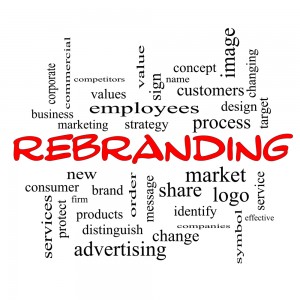 In today’s image-conscious society, everything is judged first by how it looks. Rebranding has become the « cure du jour » for everything from sluggish sales to increased competition and outdated products. So how well do these makeovers work?